The “Buy” buttons in this guide are affiliate links. If you buy through one, the retailer pays us a small commission. It costs you nothing extra, and it never changes what we recommend: every verdict here is locked before any link goes in.
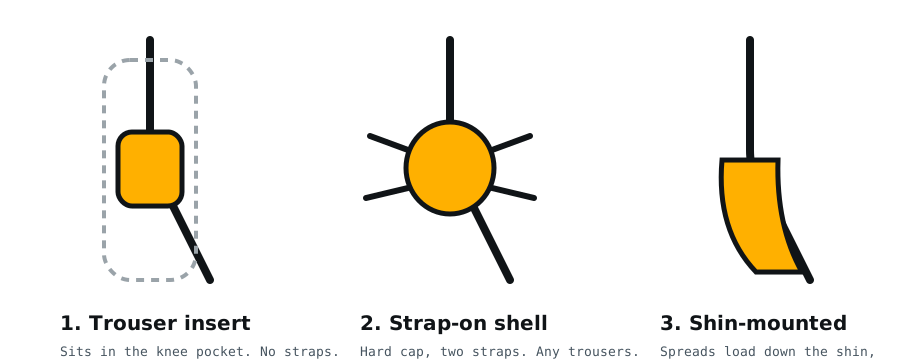
- Best overallSnickers 9169 D3O inserts (£40 to £55) in any pocketed work trouser. The pair you forget you’re wearing.
- All-day kneelingFento Original (£75 to £89). Spreads the load along the shin, not the kneecap. Floor trades start here.
- BudgetSnickers 9110 Craftsmen (about £24), in pocketed trousers. The cheapest genuinely certified pad here: same EN 14404 Type 2 Level 1 as the £45 pick, in plain EVA instead of D3O.
Why your knees are a business asset
If you tile, plumb, lay floors, fit kitchens or chase cables at skirting height, your knees take a beating no office worker can imagine. The damage is cumulative: bursitis (a swollen, fluid-filled cushion in the joint), worn cartilage and, at the far end, a knee replacement and months off the tools.
Health and Safety Executive (HSE) statistics consistently show musculoskeletal disorders as one of the biggest causes of work-related ill health in Great Britain, with construction among the worst-hit industries. For the self-employed, every one of those days off is unpaid. That changes the maths completely.
So this guide doesn’t ask “which knee pads are cheapest”. It asks which ones you’ll still be wearing in a year, because the pads that live in the van instead of on your knees protect nothing.
The best knee pad is the one you don’t take off. Comfort beats armour. A mid-protection pad worn ten hours a day does more for your knees than a tank of a pad that comes off by ten o’clock.
- The Snickers 9169 knee pad inserts use D3O, a material that stays flexible in motion and stiffens instantly under impact, and cost £40 to £55.
- The Fento Original costs £75 to £89, weighs about 250g per side, and spreads kneeling load along the shin instead of the kneecap.
- The Snickers 9110 Craftsmen kneepads cost about £24 and meet EN 14404 Type 2 Level 1, the same certification level as the £45 pick, using plain EVA foam rather than D3O.
- At a £280 day rate, a £45 pair of knee pads has a Payback Score of 0.2: it covers its cost by preventing roughly ninety minutes of lost work, once.
What makes a knee pad a trade knee pad
Trade knee pads are knee pads built for kneeling as a job rather than as an occasional chore: certified to EN 14404, made from a material that does not pack flat inside a season, and fixed in a way that survives standing up and kneeling back down two hundred times a day. Everything else is a DIY pad being sold at a trade price.
The distinction matters because the two are solving different problems. A DIY pad has to survive one Saturday laying laminate in a spare room. A trade knee pad has to survive four hours a day, five days a week, for a year, and it is the for a year part that finishes off almost everything hanging in a supermarket aisle.
The four things that actually separate them
Certification, or the quiet absence of it. A genuine trade pad states its EN 14404 type and level on the label. DIY pads very often state nothing, because nothing is what they were tested to. If a listing does not name the standard, assume it does not meet it.
Hours, not tasks. Consumer pads are specified around a job. Trade pads are specified around a shift. Floor layers, tilers and carpet fitters kneel for three to six hours of an eight hour day, and that is a completely different load case from twenty minutes of DIY.
They are consumables, not kit. A trade pad in daily use is finished in twelve to eighteen months, whether or not it looks it. Foam that has packed flat still feels like a pad and no longer works like one. Budget for replacing them the way you budget for blades.
The fixing has to survive the standing up. Most straps do not fail while you kneel, they fail from the repeated stand-and-kneel cycle, sliding down the calf until you stop wearing them. This is the single most common reason a tradesperson abandons a pair, and it is why pocketed inserts win for anyone who owns the trousers.
Trade knee pads and DIY knee pads, side by side
| Trade knee pad | DIY knee pad | |
|---|---|---|
| Certification | EN 14404 STATED | USUALLY NONE |
| Designed around | 3 to 6 hours a day | An afternoon |
| Cushioning | D3O, gel or high-density EVA | Open-cell foam |
| Working life | 12 to 18 months daily | Outlasts the job, not the year |
| Street price | £24 TO £89 | £8 TO £15 |
| Cost per working day | 10P TO 25P | Higher, once you replace them |
That last row is the one worth sitting with. A £75 pair worn every day for eighteen months costs around 20p a day. A £12 pair replaced every couple of months costs more than that and protects less while it does it. The cheap pad is only cheap at the till.
If the label does not name EN 14404, it is not a trade knee pad, whatever the listing calls it. Start there and the field narrows fast.
The picks at a glance
Snickers 9169 D3O inserts + pocketed trousers
D3O is a clever foam that stays soft as you move but stiffens instantly under impact. In a decent pocketed work trouser these disappear: no straps, no sweaty backs of knees, nothing to take off. The combination most likely to be on your knees at 4pm on a Friday, which is the whole game.
Fento Original
Different idea entirely: a shin-mounted support that spreads your weight down the lower leg instead of stacking it on the kneecap, developed with medical specialists and weighing about 250g a side. The most expensive pick here, and the one the floor trades consistently rate as the best money they have spent on their knees.
Snickers 9110 Craftsmen
The 9169's cheaper sibling: the same KneeGuard fit and the same EN 14404 Type 2 Level 1 certification, in plain EVA foam instead of D3O, so it firms up less cleverly under impact. About £24, and the cheapest pad here that is genuinely certified. Needs pocketed trousers, same as the 9169.
Full comparison table
| Pad | Type | Street price | EN 14404 | Payback Score* | Best for | |
|---|---|---|---|---|---|---|
| Snickers 9169 D3O | Trouser insert | £40 to £55 | TYPE 2 / L1 | 0.2 DAYS | Most trades, all-day wear | Buy (ad) → |
| Fento Original | Shin support | £75 to £89 | EN 14404 Type 1 | 0.3 DAYS | Tilers, floor layers, landscapers | Buy (ad) → |
| ToughBuilt GelFit Rocker | Strap-on shell | £30 to £40 | TYPE 2 / L1 | 0.15 DAYS | Mixed surfaces, leaning work | |
| Redbacks Pads | Trouser insert | £25 to £30 | TYPE 2 / L1 | 0.1 DAYS | Spring-cushion alternative to gel | |
| Blaklader 4058 | Trouser insert | £20 to £28 | M1G / H1G | 0.1 DAYS | Blaklader trouser owners | |
| KneePro Ultra Flex III | Strap-on shell | £40 to £50 | HINGED SHELL | 0.2 DAYS | Rough ground, demolition | |
| Snickers 9110 Craftsmen | Trouser insert | £24 | TYPE 2 / L1 | 0.1 DAYS | Cheapest certified, needs pocketed trousers | Buy (ad) → |
| Generic gel (unbranded) | Strap-on shell | £10 to £18 | OFTEN NONE | N/A | Avoid. See small print below |
*Payback Score = lost working days the pad must save to cover its cost, at a £280 day rate. Lower is better. Run your own rate through the calculator. Affiliate links (Fento and the Snickers 9110 via Amazon, the Snickers 9169 via Screwfix) sit in some rows; the recommendations were locked before any link was added.
The detail on each pick
Snickers 9169 D3O: the pair you forget you’re wearing
Inserts live inside the knee pocket of your work trousers, which solves the two problems that kill strap-on pads: straps cutting in behind the knee, and the faff of taking them on and off in the van. The D3O material is the upgrade over standard foam inserts. It moves with you when you walk, then firms up the instant your knee hits concrete.
The catch is obvious: you need pocketed trousers, and a decent pair of those is £40 to £90 on top. If you’re already in Snickers, Blaklader or Scruffs trousers, this is the easiest upgrade in this guide.
Fento Original: for the trades that live on their knees
Everything else in this guide cushions the kneecap. The Fento takes the load off it, spreading your weight along the shin with a wide elastic strap deliberately positioned so nothing constricts behind the knee. At about 250g a side you stop noticing them, and the difference at the end of a full tiling day is not subtle.
At £75 to £89 it’s the priciest pick here, which is why the payback framing matters: for a floor layer, that is one third of one lost day. Floor trades, landscapers and anyone with existing knee trouble should start here.
Snickers 9110 Craftsmen: the cheapest certified protection
The budget slot tells an honest story since the Portwest KP60 was discontinued. Cheap, certified and tough is harder to find than it looks: most sub-£20 strap-on pads are either uncertified or only EN 14404 Level 0, meaning no penetration resistance, so they are not in this guide.
The 9110 is the cheapest pad here that is genuinely certified: EN 14404 Type 2 Level 1, the same level as the £45 9169, in plain EVA rather than D3O. If you already wear pocketed trousers it is the easy budget choice, and it shares the 9169's KneeGuard fit. The honest catch: it needs pocketed trousers, and it is the same protection level as the 9169, not higher.
If you specifically need Level 2 penetration resistance for sharp debris or demolition, the cheap option that used to fill that gap has gone. Genuine Level 2 now means a heavier hard-shell pad at more money, not a budget buy.
The EN 14404 small print, decoded
EN 14404 is the European standard for knee protection at work. The label has two parts worth reading:
- Type 1 pads strap to your leg, Type 2 pads fit trouser pockets. Neither is better, it’s just the fixing method.
- Level 1 protects on flat surfaces. Level 2 adds penetration resistance, meaning a dropped screw or a shard of tile won’t come through the pad. Site work with debris underfoot wants Level 2; finished-floor trades are fine on Level 1.
This is also where the unbranded £10 gel pads fall down: many carry no certification at all, and uncertified gel has a habit of splitting at the seams within weeks. The cheapest pad that protects nothing is the most expensive pad you can buy.
Quick answers
What are trade knee pads?
Trade knee pads are knee pads built for kneeling as a job rather than as an occasional chore. In practice that means three things: certification to EN 14404 stated on the label, cushioning that does not pack flat within a season, such as D3O, gel or high-density EVA, and a fixing that survives repeatedly standing up and kneeling back down. A pad that names no standard is a DIY pad, whatever the listing calls it.
What is the difference between trade and DIY knee pads?
Working life, mainly. A DIY pad is designed around a single afternoon; a trade pad is designed around three to six hours a day, five days a week. Trade pads state an EN 14404 type and level, DIY pads usually state nothing, and trade pads are consumables that need replacing every 12 to 18 months in daily use. A £75 trade pair worn daily works out at roughly 20p a day, which is less than a £12 pair replaced every couple of months.
Are gel knee pads better than foam knee pads?
Gel conforms to the knee and spreads pressure better over long sessions, and it keeps doing so for years. Foam is lighter and cheaper but compresses flat over time. All-day kneelers should buy gel or D3O; everyone else can save the money.
Should I buy knee pad inserts or strap-on knee pads?
Inserts win on comfort and all-day wear if you already own pocketed trousers. Strap-ons win if you kneel occasionally, switch between trousers, or work in shorts all summer like half the country’s landscapers.
Do knee pads help if my knees already hurt?
No, and anyone telling you otherwise is selling something. Pads slow the damage down. Knees that already complain need pacing, technique changes and, past a point, a professional opinion. The pad is insurance, not treatment.
How long do knee pads last?
In daily trade use, 12 to 18 months. The failure is gradual and easy to miss: foam and gel compress permanently, so the pad still feels like a pad while doing far less. If you can press the padding flat with your thumb and it stays flat, it is finished. Treat them as a consumable and budget for replacement the way you would for blades.
Why do my knee pads keep slipping down?
Because of the standing up, not the kneeling. Strap-on pads work loose over the repeated stand-and-kneel cycle and gradually slide down the calf, and this is the single most common reason people stop wearing them. Two fixes: strap above and below the knee rather than behind the joint, or switch to trouser-pocket inserts, which cannot slip because the trousers hold them.
Do knee pads restrict circulation?
They can, if the strap sits directly behind the knee and is pulled tight. The back of the knee carries the blood vessels supplying the lower leg, which is why a strap there causes numbness or aching calves after long sessions. Pads with two straps that sit above and below the joint avoid it, and trouser inserts avoid it entirely because nothing wraps the leg.
Will any knee pad fit any work trousers?
No, and this catches people out. Knee pockets vary in size and height between brands, so a pad that fits one make of trouser may sit too low or refuse to go in on another. Certification also works as a system rather than per item: a pad tested in one manufacturer's trousers is not automatically certified in someone else's. Check the pairing before you buy either half.
Are cheap knee pads worth buying?
Only if they state a standard. The unbranded gel pads sold for around ten pounds often carry no certification at all, and uncertified gel tends to split at the seams within weeks. A certified pad at around twenty-five pounds that lasts a year costs less per working day than a ten pound pad replaced four times, and it actually protects in between.
Check your work trousers first. If they have knee pockets, the cheapest meaningful upgrade you can make this week is a £25 to £45 insert, no new kit required.